
 By Nancy Hill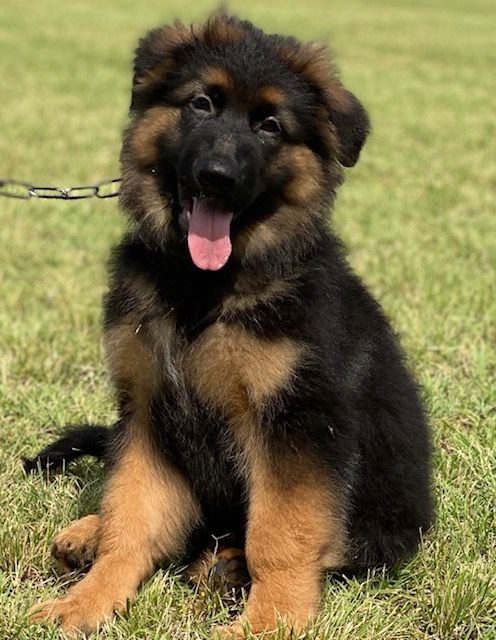
The first month with a new German Shepherd puppy sets the tone for everything that follows. Your puppy needs time to adjust, but it also needs structure from day one. New smells, new people, new sounds, and a new routine can feel like a lot, so you should keep the early days calm and predictable. When you focus on trust, training, and simple routines, your puppy learns that your home is safe and that you are worth listening to.
Start with a steady schedule for feeding, potty breaks, naps, and play. Puppies feel more secure when they know what comes next, and German Shepherds often respond well to structure. A routine also helps you spot changes in appetite, energy, or behavior.
Potty training should begin right away. Take your puppy outside after waking, eating, drinking, playing, and napping. Use the same spot when possible, and praise the puppy as soon as it gets it right. Accidents will happen, but calm correction and consistency help your puppy learn faster.
Crate training can also make the first month easier. Keep the crate comfortable, quiet, and positive. Short crate sessions during the day help your puppy see it as a resting place rather than a punishment. This habit supports sleep, house training, and safe downtime.
Training should start with small lessons. Teach your puppy its name, reward eye contact, and practice simple cues like sit, come, and leave it. Keep sessions short because young puppies lose focus quickly, but repeat them often throughout the day.
If you recently brought home a German Shepherd puppy for sale, remember that socialization should happen gently. Let your puppy meet calm people, hear normal household sounds, and explore safe spaces. Do not overwhelm it with loud places or too many visitors at once.
Trust grows through fair rules and kind handling. Touch the paws, ears, collar, and mouth during calm moments, and reward cooperation. This helps with grooming, vet visits, and future care. It also teaches your puppy that human hands bring safety, not stress.
German Shepherd puppies have plenty of energy, but they also need rest. A tired puppy can become wild, mouthy, and impossible to reason with. Short play sessions, gentle training games, and quiet naps create better balance than nonstop activity.
Puppy biting needs early guidance. Redirect teeth to toys, stop play when biting gets too rough, and reward calm behavior. Do not turn your hands into chew toys, even if it seems funny at first. Tiny teeth become big-dog habits fast.
The first 30 days will not be perfect, and that is fine. You may deal with accidents, whining, chewing, and a few dramatic puppy moments. Stay patient, keep your rules clear, and celebrate small wins. With steady guidance, your German Shepherd puppy can settle in and start growing into a loyal, confident companion.